Showing posts with label Planets and Satellites. Show all posts

May 5, 2007

Variation in Ice Depths across the Surface of Mars

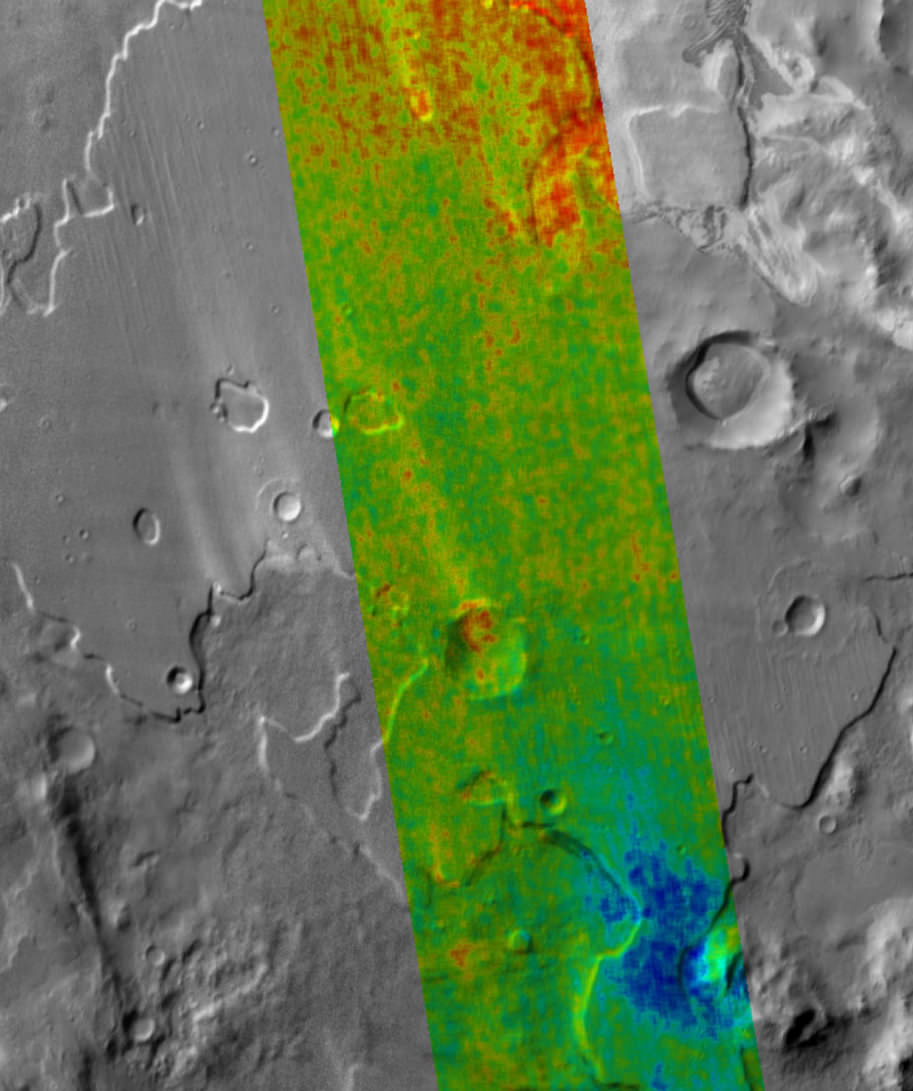
NASA's Mars Odyssey has performed a detailed analysis of water ice deposits beneath the surface of Mars, and found they vary greatly in depth. In other words, when future spacecraft land on the surface of Mars and start digging to reach these icy deposits, they might hit paydirt right away, or have to drill and drill and drill.

Mars Odyssey is equipped with Thermal Emission Imaging System as part of its suite of scientific instruments. This camera allows the spacecraft to detect subtle differences in temperature on the Martian surface. Regions which have ice close to the surface retain heat differently than regions where the ice layer is much deeper. This allows scientists to built up a map of ice depth.

In some cases, the ice will only be a few centimetres beneath the Martian surface, while in other situations, it could be many metres deep.

Future spacecraft, such as the Phoenix Mars Lander, may need to dig deep to find the ice.

By Fraser Cain
Original Source: NASA/JPL/ASU News Release

Spirit finds an ancient Volcanic Explosion

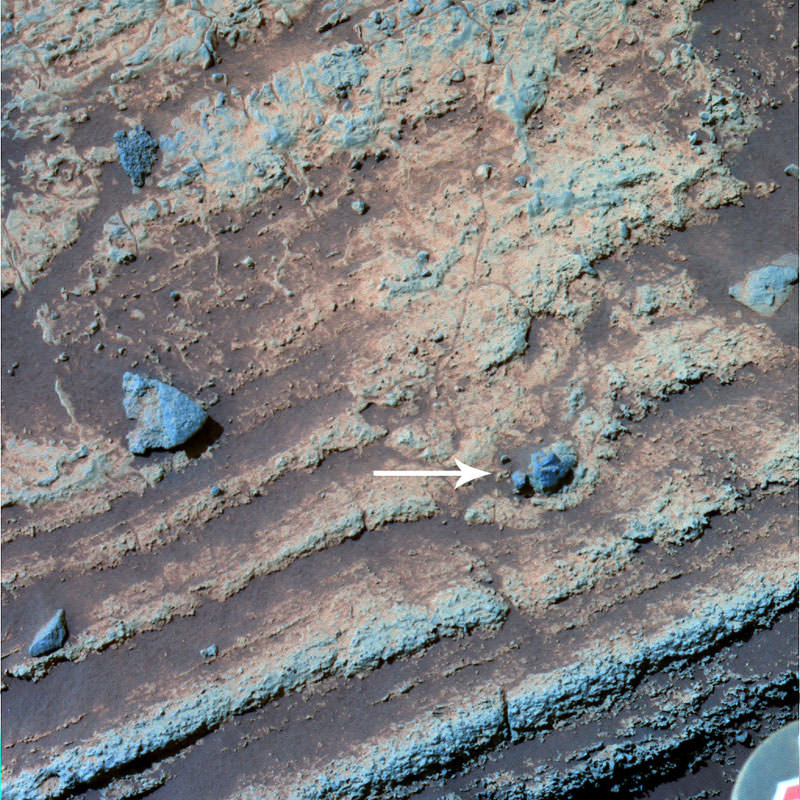
NASA’s Spirit rover has turned up evidence that there was once a massive volcanic explosion in the region it’s currently exploring on the surface of Mars. The region is called “Home Plate”, and it’s an plateau of layered bedrock approximately 2 metres (6 feet) high in Columbia Hills.

Spirit found that that area around Home Plate is mostly basaltic rocks, which are created during very fast lava flows. When the lava makes contact with liquid water, it can explode. So the rocks on Home Plate appear to have been created in this environment of lava and liquid water. More good news for the search for evidence of past liquid water on Mars.

One of the strongest pieces of evidence is what the researchers are calling “bomb sag”. When the lava and water meet, the explosion hurls chunks of rock into the air. One of these pieces of shrapnel came back down and lodged in softer deposits.

It’s hard to believe, but Spirit and Opportunity are now in their 4th year of exploring Mars. NASA reports they’re both in good health and continuing to return science data.

By Fraser Cain

Original Source: NASA/JPL News Release

May 4, 2007

New Horizons' New Images of Jupiter

Although its primary target will be Pluto, NASA’s New Horizons spacecraft is taking the time to do a little science along the way. During its recent Jupiter flyby, the spacecraft was able to test out its scientific instruments as a dress rehearsal for its final Pluto encounter. NASA held a big press conference this week, and released dozens of new images and scientific findings gathered by New Horizons.

New Horizons made its closest approach to Jupiter on February 28, 2007 when it came within 2.3 million km (1.4 million miles) of the giant planet. As part of this flyby, it captured the closest ever view of Jupiter’s “Little Red Spot”, detailed images of its faint rings, and events on its moons. It made a total of 700 observations, and it’s now transmitting that data back to Earth - 70% of the 34 gigabits of data have been returned so far.

The spacecraft made many discoveries. Here are a few examples. It’s view of “Little Red” shows how these kinds of vast storms evolve in Jupiter’s high atmosphere. It showed how the planet’s rings change quickly, over the course of weeks and months and revealed the effect of a recent impact. It made several observations of Jupiter’s moon Io, with its volcanic plumes scattering lava across its surface.

New Horizons is the fastest spacecraft ever launched. This Jupiter flyby gave it an additional speed boost, and helped put it on target to reach Pluto in 2015.

All the images presented by NASA are available here.
Original Source:
NASA News Release

Mercury: Inside Soft - Outside Rock Hard...

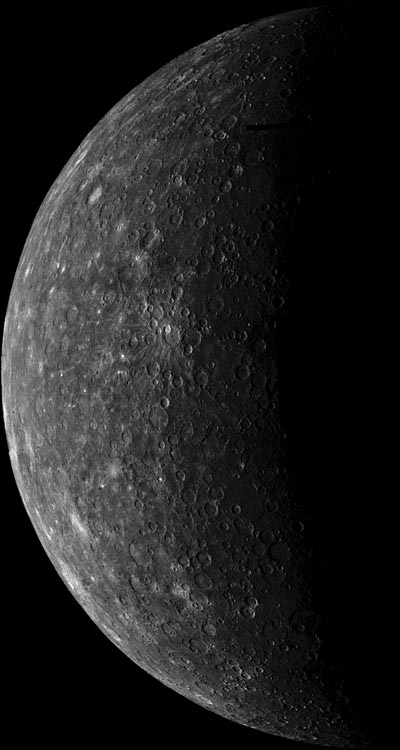
A team of astronomers has discovered that tiny Mercury has a molten core, just like our own planet. The discovery was made using three ground-based radio observatories that bounced radio waves off the planet, and then analyzed the return signals.

Before this research, scientists were divided about the structure of Mercury. Most models predicted that it has an iron-rich core, but it wasn’t known if it had completely cooled, or was still liquid inside. Trace quantities of sulfur and other chemicals could have mixed in with the planet while it was forming, and this kept it from completely solidifying over time.

The astronomers first beamed a series of radio waves at the surface of Mercury, and then measured them as they bounced off the surface and returned to Earth. The returned signals were analyzed by a trio of radio telescopes: the Arecibo Observatory in Puerto Rico, NSF’s Robert C. Byrd Green Bank Telescope, and the NASA/JPL 70-meter antenna at Goldstone, California.

They were able to detect a wobbling of the signal that was double what you would expect from a planet with a solid core, but exactly the right amount for a planet with a liquid core.

Their research is the cover story of the May 4, 2007 edition of the Journal Science.

Original Source: NSF News Release
Write up by Fraser Cain (www.universetoday.com)

May 3, 2007

Discovery of Planets

Written by Hemal S. Shah

“My Very Educated Mother Just Showed Us Nine Planets”, is the sentence that an astronomy enthusiast likes. See the box given below to know the secret of the sentence. The planets Mercury, Venus, Earth, Mars, Jupiter and Saturn were already known since the ancient times. We do not have any mention of the discovery of any of these planets in any of the available ancient literatures. The one obvious reason for this is that all these planets are visible without the aid of telescopes. The motions can also be studied with respect to the stationery stars and hence it became possible to predict their positions. The planet Saturn was thought to be the farthest of all planets; the last planet of the Solar System. The day, 13th March 1781, changed the acute perception of Saturn being the last planet.

On this day, Sir William Herschel along with his sister Caroline Herschel caught sight of a new planet through his homemade telescope. Initially he thought that the object he found was a comet; later it got confirmed that the object was a new planet! The first planet discovered in the entire recorded history of mankind. Since it was the first time that a planet was discovered, a problem arose world-over for what should be the name of the newly discovered planet? After much debate and suggestions the name kept for the planet was Uranus. It was later, that the fact came to light that Uranus was sighted many times before. But, it was always dismissed as simply another star or a comet.

William Herschel was a type of person who believed that men and animals resided on Mars, Moon and Sun.

The world-renowned astronomer Galileo Galilee, the first person to use the telescope for astronomical observations, made the Science of Astronomy richer. He was the first person to have seen four Satellites around the planet Jupiter, phases of inner planets: Venus and Mercury, irregularities on the surface of the Moon (craters) and on the surface of the Sun (sunspots). He also saw something peculiar around the planet Saturn. He could not recognize what the peculiar thing was. Later Christian Huygens identified them as Rings around the planet Saturn. Galileo, through all his findings wanted to prove that the heavenly bodies are not exact and Earth does not hold any superior position, as it was strongly believed in those days.

Galileo could have struck a goldmine! While scanning the night skies, Galileo did notice the planet Neptune in the year 1612 and 1613. On both of these occasions he mistook Neptune for a fixed star.

After the discovery of Uranus, the next thing to be worked out was to plot its elliptical orbit around the Sun. Once this was done, astronomers found some discrepancy in actual orbit that Uranus was taking and the orbit that they had plotted. They soon knew that the gravitational force of some external mass was perturbing Uranus in its orbit around the Sun.

On the basis of observed perturbations, astronomers calculated the orbit and mass of the unknown external object. Then began the search for this unidentified object at the speculated positions. They were aware that this new object, if discovered would be the eighth planet of the Solar System.

Johann Gottfried Galle discovered the new planet Neptune on September 23, 1846, nearly at the same location as was predicted by Urbain Le Verrier in the year 1846 and by John Couch Adams in the year 1843.

Many observers had sighted the planet Neptune in the past before its discovery. Each time it was thought of as a fixed star or some comet and was never considered as a planet, even by Galileo as mentioned earlier.

Discovery of the planet Uranus and its exact orbital calculations helped in finding Neptune. The orbital calculations were on the basis of the laws enunciated by Sir Isaac Newton and Johannesse Kepler.

The Solar System was then known to have eight planets with Neptune as the last and farthest planet orbiting around the Sun. Almost 84 years after the discovery of Neptune, an astronomer named Clyde W. Tombaugh at the Lowell Observatory in Arizona discovered a new planet Pluto on February 18, 1930.

He didn't discover Pluto while scanning the sky through telescope; rather he discovered it when he was comparing the two photographic plates of a particular region of the sky taken on different dates, January 23 and 29. In it he noticed the displacement of a star like object indicating that either it was a planet or a comet. Later came the confirmation that it was a planet, the ninth planet of the Solar System.

Another 75 years have passed since the discovery of the planet Pluto. We have all studied about the Solar System consisting of nine planets with the Sun as the main central body. It seems that now the time has come to change the idea of our Solar System.

Astronomers have discovered a new planet orbiting the Sun. This planet is bigger than Pluto. It is situated 97 times further than the Earth from the Sun. This new planet was actually first photographed in 2003 by the Samuel Oschin Telescope at Palomar Observatory. These telescopes are robotically controlled. They are assigned the task of photographing regions of sky tile by tile. The same region is photographed again after some interval of time. Once this is done, astronomers check for the displacement of light points in the pairs of photographs. Millions of images are generated and stored in computers. Computers do analysis, and those pairs of photographs, which have even the slightest movements of objects, are short listed for more intense analysis by the scientists.

Mike Brown, Chad Trujillo and David Rabinowitz are the discoverers of the new planet. In an ongoing survey at Palomar Observatory, these scientists photographed the planet in 2003. In a reanalysis of the photographs, on January 5th 2005, they detected the new planet. The new planet is currently known as 2003 UB313. Since its discovery, the scientists have been studying the planet to better estimate its size and its motions.

A name for the new planet is suggested by its discoverers to the International Astronomical Union (IAU) and are waiting for the decision of this body to officially announce it.

A matter of pride for all of us is that an Indian Astronomer, Dr. J. J. Rawal had predicted in 1978 about the existence and location of the tenth planet. NASA accepted his scientific paper. According to him the new planet orbited the Sun at a distance of 99 AUs (1 AU is average Earth-Sun distance) and today after the discovery it is found to be at a distance of 97 AUs. His calculations are accurate enough. We hope that the due credit shall be given to Dr. J. J. Rawal for his excellent work done way back in 1978.

Visiting Venus with Venus Express

Written by Hemal S. Shah

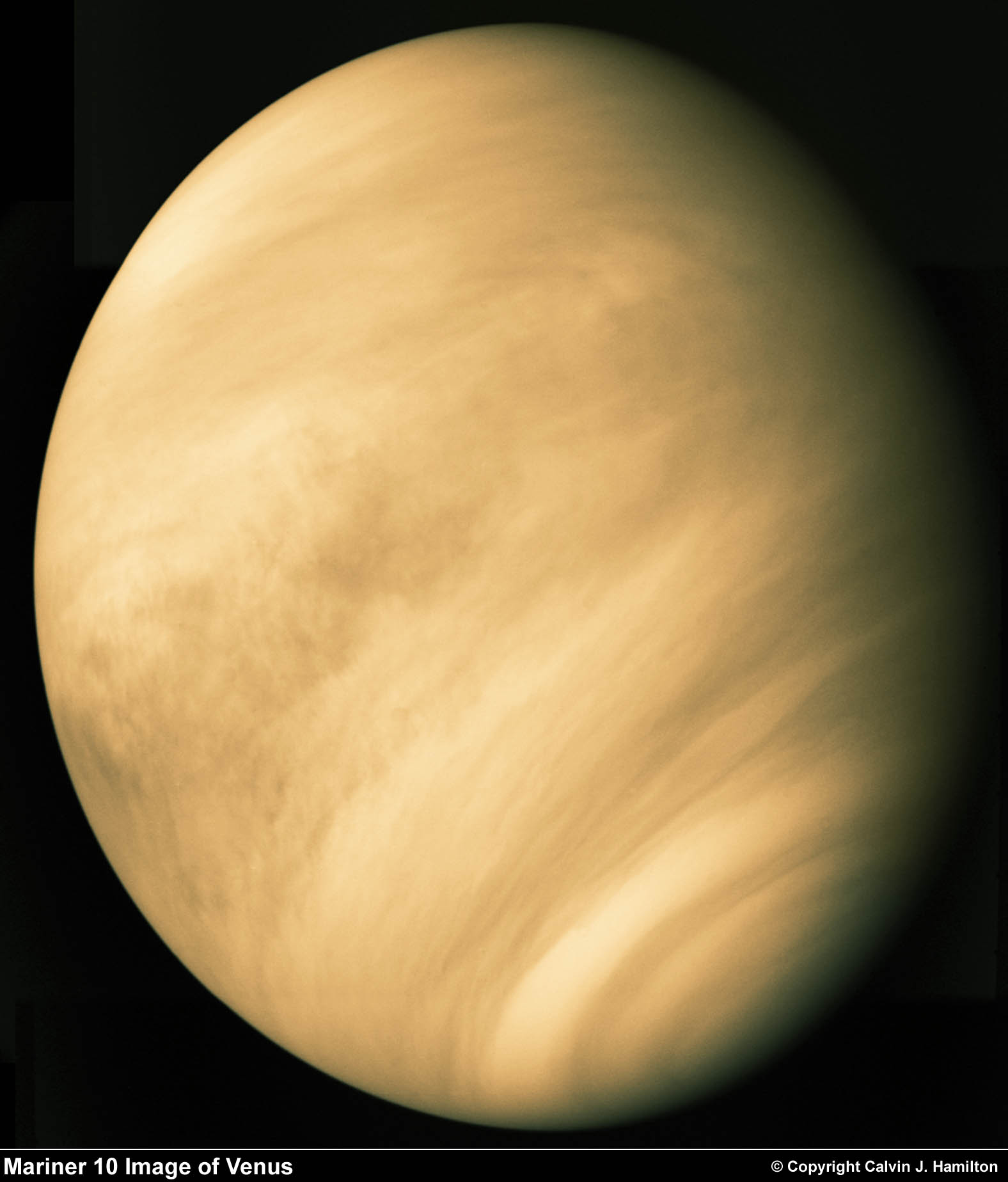
From the ancient times Venus has always remained the most beautiful sight of the night sky. Its fabulous glare outshines every other heavenly object in the night sky accept the Moon. After the Sun and the Moon, Venus is the third brightest object in our sky. The surface temperature on Venus is highest when compared with other planets of the solar system. The temperature is even higher than Mercury, although Mercury is nearest to the Sun!

Venus atmosphere is extremely dense. It contains thick layer of clouds, as much thick as 65 kilometers. So walking on the surface of Venus would be like walking under 3,000 feet of water here on Earth. Any living being would be crushed. The dense atmosphere of Venus reflects 80% of the sunlight that it receives. This is the reason why Venus shines so brightly. Even after reflecting most of the light, the carbon dioxide in the atmosphere traps the heat very efficiently and raises the temperature to as high as 464 degree Celsius. It is known as Green House Effect.

Venus is almost as big as Earth and due to this it is said that Earth-Venus are twin sisters. Apart from the size, rest everything is drastically different between the Earth and the Venus. It orbits the Sun at a distance of 108 million kilometers (10.8 crores).

We have very less information about the surface or the lower atmosphere of Venus. Even the most powerful telescopes cannot penetrate through the dense atmosphere and that is why we do not know much about it.

Up to now only three missions have been dedicated to studying the heavily clouded planet. As a result in order to know more, European Space Agency sent Venus Express onto a 162-day journey to reach the second planet from the Sun. The spacecraft was launched on 8th November 2005 and within 4 hours it set itself into a Venus-bound course and later unfurled its solar array.

Venus Express’ primary goal is to explore close at the Venusian atmosphere, team members are hopeful the spacecraft’s instruments may find hinds of active volcanoes and other features on the planet’s surface.

The ESA officials expect Venus Express to enter orbit around its target planet Venus on April 11 next year. On nearing the planet, probe will make adjustments in its orbit while going around the planet and by about May 7 the probe will reach its final flight configuration.

It is expected that the Venus Express probe will work in good condition for at least 15 months studying the Venusian atmosphere. It might be interesting to know for readers that one Venus day is equal to 243 Earth days. Venus spins very slowly on its axis. Hence the period of 15 months is equal to just two Venus days.

Our the course of the mission the probe will bounce radio waves off the planet’s surface, snap pictures of its swirling atmosphere, take the temperature of the clouds, and search for hints of a magnetic field. All this data will help scientists better understand a planet that from the outside resembles an early Earth and perhaps reveal clues of the existence of life.

Visiting Pluto with New Horizons

Written by Hemal S. Shah

Going to the extremes of the Solar System to unravel the mysteries of its evolution…

Upto a few months ago, our solar system was known to have nine planets orbiting around the Sun. Now the situation is different; a new member is added in the group of planets. Thus, the number of planets is increased to 10 instead of 9. The 10th planet is still an unnamed object. But, the discoverers of the planet are of opinion to name it as Xena.

The new planet could be one and a half times bigger than the size of Pluto. Astronomers have also found out a satellite going around it. Discovery of a satellite is an extremely important finding, as it enables us to estimate the size and the mass of its parent object. The name that is most likely to be given to the satellite is Gabrielle. Both the names, Xena and Gabrielle, are the names of two female friends from some Roman historical story.

We drifted from Pluto to Xena to get updated on some of the latest developments. What we know about Pluto is very less, even though its discovery was made 75 years ago. If compared with the information of other planets, then the information about Pluto that we have shall fit on one page, whereas each planet will consume a book of at least 100 pages.

Man’s quest is to know as much more as possible about everything. Then, why is it so that we know so less about Pluto? There are several viable reasons for this. One of the reasons is its size. In our solar system, there are two satellites, which are bigger than planet Pluto. Isn’t this an interesting fact? One satellite is of Jupiter called Ganymede and another is of the ringed planet Saturn called Titan. To study a planet it is necessary to observe it. Planets do have light of their own. They only reflect the light received from the Sun. Pluto receives very feeble sunlight as it is extremely far from the Sun and because of its smaller size, not much of light gets reflected from its surface. Whatever light is reflected has to come all the way back to Earth for us to examine it. Most of the reflected light from Pluto gets scattered while traveling and whatever light is left gets damaged once it enters the atmosphere of the earth. These are some of the key reasons for our lack of information about Pluto.

The only way we can have loads of information about Pluto is by going very near to it and explore it. The only hurdle in this is the enormous distance between the Earth and Pluto. It is at a mean distance of 5,900 million kilometers from the Sun; whereas Earth is at a mean distance of 150 million kilometers from the Sun. Rest all other planets have been richly explored with the help of space probes like Voyager, Viking, Galileo, Cassini, Mariner, etc.

New Horizons is a space probe exclusively planned for studying the planet Pluto, its companion Charon and than the Kuiper belt objects. The probe shall also study two more objects P1 and P2, which were recently found orbiting the planet.

The New Horizons spacecraft is 8 feet across and weighs 465 kilograms when loaded with fuel. The spacecraft will move at 58,338 kilometers per hour. This is the highest speed; none of the other NASA probes of past have traveled this fast. The probe will take nine years to reach Pluto. The day 14th July 2015 shall be an interesting day, as many new revelations would be made about the distant icy cold world.

It is inspiring to know that aboard the NASA spacecraft are ashes of the late astronomer Clyde Tombugh, who discovered the planet in 1930 at the Lowell Observatory in Flagstaff, Arizona. He died in January 17, 1997.

The spacecraft may reveal about the extra moons that might be orbiting around the planet and another astonishing feature that may come in light is about the ring system around Pluto. Calculations done by the scientists show that small moon around Pluto-having low escape speeds-when hit by objects not only are craters formed, but debris from the moons would be tossed off into space resulting in a thin ring system.

Imagine a relative of yours on the planet Pluto. He gives you a call from his cell phone. The signals from his cell phone, traveling at the speed of light will take 4 hours to reach here on Earth. So when he says “hello”, you will hear him after 4 hours. Obviously you will respond back. Let us assume that you reply him with “How are you?”. This sentence of yours, he will hear after another 4 hours. This means that he gets a reply after 8 hours.

The data that New Horizons will send will take 4 hours to reach on Earth. Any command that Ground Control sends will also take 4 hours to reach upto New Horizons.

New Horizons is composed of 7 primary instruments meant for all the explorations it has to do. An instrument named Alice is a spectrometer, which shall measure the gas composition by analyzing the light bounced off the surface. Second instrument is RALPH is a combination of spectrometer and a color optical imager which shall do surface structure mapping. Third instrument called REX is a radio experiment for measuring atmospheric temperature and composition. The most interesting one is LORRI an optical telescope, which will provide us with the highest resolution images of the surface. Fifth is PEPSSI, a plasma-sensing instrument for measuring particles escaping from Pluto’s atmosphere. Sixth instrument is known as SWAP, it will measure the properties of the solar wind and also check for the magnetosphere around Pluto. The last instrument is SDC, its use is to measure dust impacts at the New Horizons spacecraft during its entire trajectory. This instrument was built by a group of students at the University of Colorado in Boulder…. lucky students.

New Horizons space probe is designed such that it draws its power from the decay of a radioactive element. The heat released in the decay process gets converted into electricity and stored in a battery. The spacecraft cannot rely on solar power, the quantity of sunlight will decrease as it goes away from the Earth and when it nears Pluto, barely any sunlight will be there. Sun just looks like a bright star from the surface Pluto.

Pluto holds many secrets, which shall be unrevealed by New Horizons. Text books will have to be changed throughout the world. It will also help us in understanding about the evolution of our Solar System, about our beginning, about our origin. This journey is a journey of Man’s desire to the extremes of the solar system to know about its own origin and evolution.

Come fast 2015.

From India to Moon

Importance of the Moon

Who doesn’t like friends? Every person sometime or the other must have had at least one friend in his life; of course this statement may not always be true for an enemy. It is also true, that every person desires to have life long friendships, but only a few are fortunate enough to have such lasting companionships. Our Earth is surely one among them!

Moon is the only natural satellite of the Earth. The word natural is used because now it is possible to have man-made satellites orbit about the Earth or orbit about the other planets of the Solar System. While addressing to such man-made satellites, the word artificial is usually used. Moon is the second brightest object in the sky and hence has always fascinated the humans, no need to separately mention about the poets. Moon has remained an object of study since the days when humans had hard times even for igniting fire to cook food. Moon along with the stars and planets, sowed the seeds of immortal curiosity in the brains of humans for the space that extends upto infinity beyond the Earth.

According to the latest theories, it implies that there would have been no intelligent life on the Earth if the Moon were not present. This is hard to believe. One would ask that what role does Moon play in the evolution of life? Moon itself is a lifeless world.

It is true that there is no life on the Moon, but we know that the Moon is responsible for the rise and fall of the water in the oceans, which we know as tides. It is believed that the evolution of life started in the water. Several different kinds of microorganisms came into existence; these were all unicellular organisms. Slowly, multi-cellular could come into being. At the time of maximum tide, billions of these organisms and other small sea-creatures were often thrown on the shore along with the seawater. Most of them could not return back, because the next sea-tide was usually of less intensity. This phenomenon forced the water creatures to get adapted to the land environments. Than the evolution of life progressed speedily resulting in millions of species all over.

The tides in the sea exert tremendous pressure on the plates of the Earth. We are talking about the rigid layer of the Earth’s crust. The land on which our buildings are standing, on which we play Cricket, Football and also the land on which the world wars have taken place. The upper layer of the Earth is broken into a few pieces, which we know as plates. The tides in the sea give momentum to the underlying plates, as a result of which they keep on moving. Such thing we experience in day-to-day life, if a bucket full of water is moved rapidly from side to side, waves forms in the water hitting the sides of the bucket and the bucket moves; so does the plates.

Because of the motion of the plates, they often collide with each other, giving rise to earthquakes and volcanoes. These activities have also played major role in the evolution of life on the Earth. Several such indirect links can be traced up to the Moon to shed light on the part of its contribution and significance.

How humans neared to the Moon

Before the invention of the telescope, not much was known. But, when Galileo in 1609, directed his telescope over Moon, he was amazed to see the beautiful features of the lunar land. He drew one of the first telescopic drawing of the Moon in his book Sidereus Nuncius and noted that it was not smooth but had craters. Later, many scientists studied the Moon in minute details with the aid of telescope and drew several maps depicting the exact features of the moon surface.

Than came the space age. Moon was widely explored with the help of spacecrafts between the periods 1960 to 1970. The two giants, USA and USSR (Soviet / Russia), to prove their superiority pumped billions of dollars for the exploration of the Moon. It was one of the biggest and the most expensive race between them. USSR was the first to have a spacecraft go around the Moon and also the first to picture the other unseen side of the Moon. On the other hand, USA was the first in having a man walk on the surface of Moon.

The first man to walk on the lunar surface was Neil Armstrong, commander of the American mission Apollo 11. The last man to stand on the Moon was Eugene Cernan, who as part of the mission Apollo 17 walked on the Moon in December 1972. As of 2006, only 12 people have walked on the surface of the Moon and it is unlikely that any new individual will walk on the surface of the Moon for at least another decade.

From India to Moon – Chandrayaan - I

Twelve different people set foot on the surface of the Moon and only four countries (USA, Russia, Japan and Europe) have sent their un-manned missions to the Moon. In the recent past, there hasn’t been any mission to Moon. World’s top most space-agencies (NASA & ESA) are concentrating on exploring the other bodies of the solar system, like planets, their satellites, comets and asteroids.

India has never had any deep space mission, but soon this is going to change. An Indian agency, ISRO (Indian Space Research Organization), have decided for an un-manned mission to the Moon. The mission is named as Chandrayaan – I, which means Moon (chandra) Craft (yaan). Authorities at ISRO say, that enough progress in planning has been made to say that the missino will take place in 2007 or 2008. The spacecraft is planned to orbit about the Moon. It shall not land on the Moon.

The spacecraft will do the survey for 2 years by making several orbits around the Moon, especially the polar region, as it might contain the water ice. The spacecraft will carry high-resolution remote sensing equipment for visible, near infrared, soft and hard x-ray frequencies. During the survey, spacecraft will map 3-dimensional topography of the lunar surface and also map its chemical characteristics. Another objective of the mission is to study about the distribution of the various minerals and chemical elements including radioactive nuclides. It is hoped that the mission will provide new insights about the origin of the Moon and its evolution.

The entire mission is estimated to cost Rs 3.8 billions (US$ 83 million). On successful completion of the mission, ISRO will stand among the first five Space Explorers of the World. Although, people of other countries have already walked on the surface of Moon decades ago, it is still not too late for India. It is a very bold India is taking with more to follow with manned missions and challenging missions to other planets of the Solar System.

Even the mission Chandrayaan – I is not an easy one. It is not just that you aim for an object and shoot, and the spacecraft is on Moon. Both the bodies, the Earth and the Moon, are moving with respect to each other. The Moon shall be at a totally different position when the spacecraft will reach near it.

The spacecraft, once launched, will not go directly, but will make two to three orbits about the Earth and than will go towards the Moon. Once the spacecraft reaches the Moon, it will again make a few revolutions around the Moon before it finally makes adequate orbital settings. Another interesting aspect of this mission is that the other space agencies like NASA and ESA are going to install their equipments for carrying out more research of the Moon. For these, ISRO is not charging, but have mutual understanding about data sharing. The spacecraft will be launched with the help of India’s indigenous Polar Satellite Launch Vehicle (PSLV).

More on Moon....

Moon makes one complete orbit about the Earth approximately once every 28 days. Moon is slowly receding away from the Earth at the rate of 38 mm per year. The Moon has a relatively insignificant and tenuous atmosphere. Due to low gravity, Moon is unable to hold the gases for longer period, whatever atmospheric gases it has are all due to the temporarily captured Solar Wind.

Ending with the hope for a spectacular launch...

Let us extend our best wishes to the ISRO and its entire staff for achieving a success for India’s most prestigious mission Chandrayaan-1.

Chandrayaan....shall be followed by Mangalyaan and than by Shaniyaan.....

April 30, 2007

Saturn’s Glowing Rings

This beautiful photograph taken by Cassini shows the rings of Saturn, lit by the Sun from below. The sunlight bounces off the rings’ opposite side and illuminates Saturn’s night side. It’s amazing to think that a photograph like this could only be taken from Cassini’s current perspective, 33 degrees above the ringplane; here on Earth, we’re stuck with the tilt of the rings that Saturn presents to us.

The image was taken on March 30, 2007 when Cassini was 1.9 million kilometers (1.2 million miles) from Saturn.

Original Source: NASA/JPL/SSI News Release

March 30, 2007

Hexagonal Structure at Saturn’s North Pole

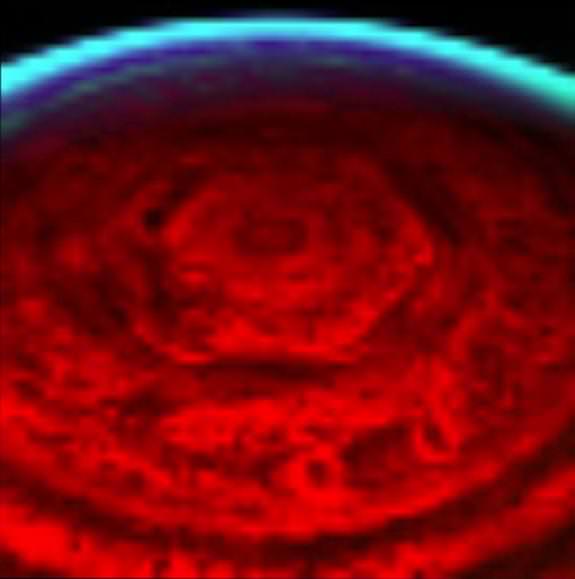
New Cassini infrared images of Saturn have revealed one of its strangest features - a bizarre six-sided cloud structure circling the entire north pole. This structure was hinted at when the Voyager spacecraft first visited the planet more than 20 years ago, but the new images from Cassini really show the structure in detail.

This cloud structure is similar to the Earth’s polar vortices, but instead of being circular, the clouds have build up this hexagonal shape. The hexagon extends much deeper than scientists previously believed, reaching 100 km (60 miles) below the cloud tops. Whatever this feature is, it’s only at the north pole. The south pole has a large storm, but it looks more like a hurricane with a giant eye.

Cassini hadn’t been able to image Saturn’s north pole until now because it was in winter in that area. This image was taken in the infrared spectrum, so it’s just variations in heat. Just like the Earth’s north pole, the region doesn’t see sunlight for a long time; in Saturn’s case, it takes 15 years of darkness. Saturn is moving out of its winter, now, and the region should be visible to Cassini’s other instruments.

Why has this cloud shape formed? That’s still a mystery.

Original Source: NASA/JPL/SSI News Release

March 23, 2007

Snowball Earth Probably Had Warm Spots

Planetary geologists propose that our planet once had periods of extreme global freezing nicknamed the “Snowball Earth” eras. During these periods, they supposed, the planet’s temperatures went so low that the oceans froze, and everything was covered in ice. Most sunlight was reflected back into space, perpetuating the icy period.

But new evidence disputes this. By analyzing glacial sedimentary rocks in Oman, researchers have discovered evidence of hot-cold cycles roughly 850-544 million years ago - during the period when the Earth should have been in a deep freeze. Instead of being completely frozen over, with solid oceans, it appears that the Earth still had warm spots with open oceans; places where geologic processes could happen.

A global freeze would have been devastating to life. Without oceans there would be no evapouration and no weather system. Icy surfaces would have reflected much of the sunlight, keeping the Earth permanently cold. It appears that we got close, with the northern and southern icecaps nearly reaching one another. But we were fortunate to avoid that disaster.

Original Source: Imperial College News Release

November 29, 2006

How Did Early Bacteria Survive Poisonous Oxygen?

Two and a half billion years ago, when our evolutionary ancestors were little more than a twinkle in a bacterium’s plasma membrane, the process known as photosynthesis suddenly gained the ability to release molecular oxygen into Earth’s atmosphere, causing one of the largest environmental changes in the history of our planet. The organisms assumed responsible were the cyanobacteria, which are known to have evolved the ability to turn water, carbon dioxide, and sunlight into oxygen and sugar, and are still around today as the blue-green algae and the chloroplasts in all green plants.

But researchers have long been puzzled as to how the cyanobacteria could make all that oxygen without poisoning themselves. To avoid their DNA getting wrecked by a hydroxyl radical that naturally occurs in the production of oxygen, the cyanobacteria would have had to evolve protective enzymes. But how could natural selection have led the cyanobacteria to evolve these enzymes if the need for them didn’t even exist yet?

Now, two groups of researchers at the California Institute of Technology offer an explanation of how cyanobacteria could have avoided this seemingly hopeless contradiction. Reporting in the December 12 Proceedings of the National Academy of Sciences (PNAS) and available online this week, the groups demonstrate that ultraviolet light striking the surface of glacial ice can lead to the accumulation of frozen oxidants and the eventual release of molecular oxygen into the oceans and atmosphere. This trickle of poison could then drive the evolution of oxygen-protecting enzymes in a variety of microbes, including the cyanobacteria. According to Yuk Yung, a professor of planetary science, and Joe Kirschvink, the Van Wingen Professor of Geobiology, the UV-peroxide solution is “rather simple and elegant.”

“Before oxygen appeared in the atmosphere, there was no ozone screen to block ultraviolet light from hitting the surface,” Kirschvink explains. “When UV light hits water vapor, it converts some of this into hydrogen peroxide, like the stuff you buy at the supermarket for bleaching hair, plus a bit of hydrogen gas.

“Normally this peroxide would not last very long due to back-reactions, but during a glaciation, the hydrogen peroxide freezes out at one degree below the freezing point of water. If UV light were to have penetrated down to the surface of a glacier, small amounts of peroxide would have been trapped in the glacial ice.” This process actually happens today in Antarctica when the ozone hole forms, allowing strong UV light to hit the ice.

Before there was any oxygen in Earth’s atmosphere or any UV screen, the glacial ice would have flowed downhill to the ocean, melted, and released trace amounts of peroxide directly into the sea water, where another type of chemical reaction converted the peroxide back into water and oxygen. This happened far away from the UV light that would kill organisms, but the oxygen was at such low levels that the cyanobacteria would have avoided oxygen poisoning.

“The ocean was a beautiful place for oxygen-protecting enzymes to evolve,” Kirschvink says. “And once those protective enzymes were in place, it paved the way for both oxygenic photosynthesis to evolve, and for aerobic respiration so that cells could actually breathe oxygen like we do.”

The evidence for the theory comes from the calculations of lead author Danie Liang, a recent graduate in planetary science at Caltech who is now at the Research Center for Environmental Changes at the Academia Sinica in Taipei, Taiwan.

According to Liang, a serious freeze-over known as the Makganyene Snowball Earth occurred 2.3 billion years ago, at roughly the time cyanobacteria evolved their oxygen-producing capabilities. During the Snowball Earth episode, enough peroxide could have been stored to produce nearly as much oxygen as is in the atmosphere now.

As an additional piece of evidence, this estimated oxygen level is also sufficient to explain the deposition of the Kalahari manganese field in South Africa, which has 80 percent of the economic reserves of manganese in the entire world. This deposit lies immediately on top of the last geological trace of the Makganyene Snowball.

“We used to think it was a cyanobacterial bloom after this glaciation that dumped the manganese out of the seawater,” says Liang. “But it may have simply been the oxygen from peroxide decomposition after the Snowball that did it.”

In addition to Kirschvink, Yung, and Liang, the other authors are Hyman Hartman of the Center for Biomedical Engineering at MIT, and Robert Kopp, a graduate student in geobiology at Caltech. Hartman, along with Chris McKay of the NASA Ames Research Center, were early advocates for the role that hydrogen peroxide played in the origin and evolution of oxygenic photosynthesis, but they could not identify a good inorganic source for it in Earth’s precambrian environment.

Original Source: Caltech News Release

October 4, 2006

Biggest Ozone Hole Ever

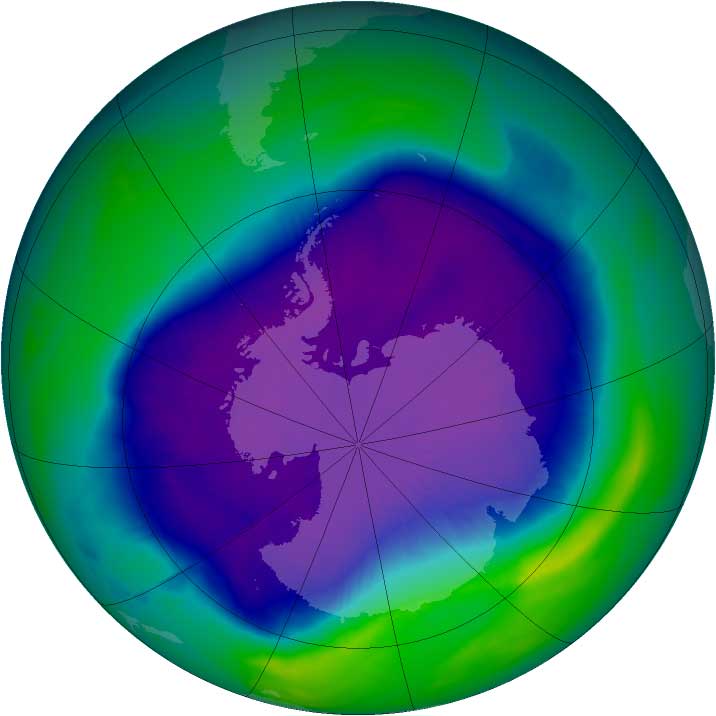
NASA and National Oceanic and Atmospheric Administration (NOAA) scientists report this year’s ozone hole in the polar region of the Southern Hemisphere has broken records for area and depth.

The ozone layer acts to protect life on Earth by blocking harmful ultraviolet rays from the sun. The “ozone hole” is a severe depletion of the ozone layer high above Antarctica. It is primarily caused by human-produced compounds that release chlorine and bromine gases in the stratosphere.

“From September 21 to 30, the average area of the ozone hole was the largest ever observed, at 10.6 million square miles,” said Paul Newman, atmospheric scientist at NASA’s Goddard Space Flight Center, Greenbelt, Md. If the stratospheric weather conditions had been normal, the ozone hole would be expected to reach a size of about 8.9 to 9.3 million square miles, about the surface area of North America.

The Ozone Monitoring Instrument on NASA’s Aura satellite measures the total amount of ozone from the ground to the upper atmosphere over the entire Antarctic continent. This instrument observed a low value of 85 Dobson Units (DU) on Oct. 8, in a region over the East Antarctic ice sheet. Dobson Units are a measure of ozone amounts above a fixed point in the atmosphere. The Ozone Monitoring Instrument was developed by the Netherlands’ Agency for Aerospace Programs, Delft, The Netherlands, and the Finnish Meteorological Institute, Helsinki, Finland.

Scientists from NOAA’s Earth System Research Laboratory in Boulder, Colo., use balloon-borne instruments to measure ozone directly over the South Pole. By Oct. 9, the total column ozone had plunged to 93 DU from approximately 300 DU in mid-July. More importantly, nearly all of the ozone in the layer between eight and 13 miles above the Earth’s surface had been destroyed. In this critical layer, the instrument measured a record low of only 1.2 DU., having rapidly plunged from an average non-hole reading of 125 DU in July and August.

“These numbers mean the ozone is virtually gone in this layer of the atmosphere,” said David Hofmann, director of the Global Monitoring Division at the NOAA Earth System Research Laboratory. “The depleted layer has an unusual vertical extent this year, so it appears that the 2006 ozone hole will go down as a record-setter.”

Observations by Aura’s Microwave Limb Sounder show extremely high levels of ozone destroying chlorine chemicals in the lower stratosphere (approximately 12.4 miles high). These high chlorine values covered the entire Antarctic region in mid to late September. The high chlorine levels were accompanied by extremely low values of ozone.

The temperature of the Antarctic stratosphere causes the severity of the ozone hole to vary from year to year. Colder than average temperatures result in larger and deeper ozone holes, while warmer temperatures lead to smaller ones. The NOAA National Centers for Environmental Prediction (NCEP) provided analyses of satellite and balloon stratospheric temperature observations. The temperature readings from NOAA satellites and balloons during late-September 2006 showed the lower stratosphere at the rim of Antarctica was approximately nine degrees Fahrenheit colder than average, increasing the size of this year’s ozone hole by 1.2 to 1.5 million square miles.

The Antarctic stratosphere warms by the return of sunlight at the end of the polar winter and by large-scale weather systems (planetary-scale waves) that form in the troposphere and move upward into the stratosphere. During the 2006 Antarctic winter and spring, these planetary-scale wave systems were relatively weak, causing the stratosphere to be colder than average.

As a result of the Montreal Protocol and its amendments, the concentrations of ozone-depleting substances in the lower atmosphere (troposphere) peaked around 1995 and are decreasing in both the troposphere and stratosphere. It is estimated these gases reached peak levels in the Antarctica stratosphere in 2001. However, these ozone-depleting substances typically have very long lifetimes in the atmosphere (more than 40 years).

As a result of this slow decline, the ozone hole is estimated to annually very slowly decrease in area by about 0.1 to 0.2 percent for the next five to 10 years. This slow decrease is masked by large year-to-year variations caused by Antarctic stratosphere weather fluctuations.

The recently completed 2006 World Meteorological Organization/United Nations Environment Programme Scientific Assessment of Ozone Depletion concluded the ozone hole recovery would be masked by annual variability for the near future and the ozone hole would fully recover in approximately 2065.

“We now have the largest ozone hole on record,” said Craig Long of NCEP. As the sun rises higher in the sky during October and November, this unusually large and persistent area may allow much more ultraviolet light than usual to reach Earth’s surface in the southern latitudes.

Original Source: NASA News Release

September 25, 2006

Warmest World in 12,000 Years

A new study by NASA climatologists finds that the world’s temperature is reaching a level that has not been seen in thousands of years.

The study appears in the current issue of the Proceedings of the National Academy of Sciences, authored by James Hansen of NASA’s Goddard Institute for Space Studies, N.Y. and colleagues from Columbia University, Sigma Space Partners, Inc., and the University of California at Santa Barbara (UCSB). The study concludes that, because of a rapid warming trend over the past 30 years, the Earth is now reaching and passing through the warmest levels in the current interglacial period, which has lasted nearly 12,000 years. This warming is forcing a migration of plant and animal species toward the poles.

The study includes worldwide instrumental temperature measurements during the past century. These data reveal that the Earth has been warming at the remarkably rapid rate of approximately 0.2° Celsius (.36° Fahrenheit) per decade for the past 30 years. This observed warming is similar to the warming rate predicted in the 1980s in initial global climate model simulations with changing levels of greenhouse gases.

“This evidence implies that we are getting close to dangerous levels of human-made (anthropogenic) pollution,” said Hansen. In recent decades, human-made greenhouse gases (GHGs) have become the dominant climate change factor.

The study notes that the world’s warming is greatest at high latitudes of the Northern Hemisphere, and it is larger over land than over ocean areas. The enhanced warming at high latitudes is attributed to effects of ice and snow. As the Earth warms, snow and ice melt, uncovering darker surfaces that absorb more sunlight and increase warming, a process called a positive feedback. Warming is less over ocean than over land because of the great heat capacity of the deep-mixing ocean, which causes warming to occur more slowly there.

Hansen and his colleagues in New York collaborated with David Lea and Martin Medina-Elizade of UCSB to obtain comparisons of recent temperatures with the history of the Earth over the past million years. The California researchers obtained a record of tropical ocean surface temperatures from the magnesium content in the shells of microscopic sea surface animals, as recorded in ocean sediments.

One of the findings from this collaboration is that the Western Equatorial Pacific and Indian Oceans are now as warm as, or warmer than, at any prior time in the Holocene. The Holocene is the relatively warm period that has existed for almost 12,000 years, since the end of the last major ice age. The Western Pacific and Indian Oceans are important because, as these researchers show, temperature change there is indicative of global temperature change. Therefore, by inference, the world as a whole is now as warm as, or warmer than, at any time in the Holocene.

According to Lea, “The Western Pacific is important for another reason, too: it is a major source of heat for the world’s oceans and for the global atmosphere.”

In contrast to the Western Pacific, the researchers find that the Eastern Pacific Ocean has not shown an equal magnitude of warming. They explain the lesser warming in the East Pacific Ocean, near South America, as being due to the fact this region is kept cool by upwelling, rising of deeper colder water to shallower depths. The deep ocean layers have not yet been affected much by human-made warming.

Hansen and his colleagues suggest that the increased temperature difference between the Western and Eastern Pacific may boost the likelihood of strong El Ninos, such as those of 1983 and 1998. An El Nino is an event that typically occurs every several years when the warm surface waters in the West Pacific slosh eastward toward South America, in the process altering weather patterns around the world.

The most important result found by these researchers is that the warming in recent decades has brought global temperature to a level within about one degree Celsius (1.8° F) of the maximum temperature of the past million years. According to Hansen “That means that further global warming of 1 degree Celsius defines a critical level. If warming is kept less than that, effects of global warming may be relatively manageable. During the warmest interglacial periods the Earth was reasonably similar to today. But if further global warming reaches 2 or 3 degrees Celsius, we will likely see changes that make Earth a different planet than the one we know. The last time it was that warm was in the middle Pliocene, about three million years ago, when sea level was estimated to have been about 25 meters (80 feet) higher than today.”

Global warming is already beginning to have noticeable effects in nature. Plants and animals can survive only within certain climatic zones, so with the warming of recent decades many of them are beginning to migrate poleward. A study that appeared in Nature Magazine in 2003 found that 1700 plant, animal and insect species moved poleward at an average rate of 6 kilometers (about 4 miles) per decade in the last half of the 20th century.

That migration rate is not fast enough to keep up with the current rate of movement of a given temperature zone, which has reached about 40 kilometers (about 25 miles) per decade in the period 1975 to 2005. “Rapid movement of climatic zones is going to be another stress on wildlife” according to Hansen. “It adds to the stress of habitat loss due to human developments. If we do not slow down the rate of global warming, many species are likely to become extinct. In effect we are pushing them off the planet.”

Original Source: NASA News Release

May 3, 2005

Transit of Venus

No person alive today has seen the Transit of Venus, as it last happened in the year 1882, 122 years ago. As we live on earth, we can see only two planets transiting - Mercury & Venus. Transit of a planet is actually a very simple phenomenon to understand. When a planet is seen to move across sun (solar disk), it is called transit of the planet across solar disk. Transit are not visible without the help of telescopes, and that is the reason there are no mentions in ancient scripts, when viewed through a telescope, one sees a dense black spot on the sun, this spot appears to be moving, but very slowly. To see the transit through a telescope, solar filter lens is required, without such a filter one can become blind, so never see sun through the telescope without proper solar filters.

Another way of witnessing a transit is by projecting the sun through telescope on white paper. For this experiment no filters are required. Sun’s image is directly seen on the white board on paper, and if a transit is happening then a black spot is also seen. Along with this several other black markings will be seen, there are sunspots. So, how will one identify the planets black spot among many sun spots, as they all will be of almost some sizzle well, sunspots are dense black at the center but became blurred at the outer part, whereas planets black spot is dense black through out and is perfectly circular, sun spots may not be seen as perfect circles.

At the time of a transit, the planet while traveling in front of the sun actually blocks the light and that is why we see black spot over sun’s surface in other words it can be said absence of light. When the planet Mercury transits across the solar disk, its black spots size is very small, the reason for this is, mercury is a small planet and nearest to sun. Venus costs a bigger black spot because it is as big as Earth and is farther from sun than mercury is.

Transit of a planet happens only when sun, transits planet and earth come in one line and on the same side. We can see transits of Mercury & Venus because their orbits are inside the orbit of the Earth. But, if we go on Jupiter then we will be able to witness the transits of Mercury, Venus, Earth & Mars, and from Pluto, we will able to see all the planets transiting over the sun’s surface accept Pluto.

Transit of Mercury or Venus is a very interesting phenomenon and is also very important. It can be use to measure the distance, between Earth-Sun or Earth & the transiting planet. Johannes Kepler was the person who first calculated and predicted a transit, which was later proved to be accurate; unfortunately he was not alive to witness it.

Next transit of Venus will happen in 2012 June 6 and then the next pair of transits will take place in 2117 Dec 11 and 2125 Dec 08. Transit of Mercury happened in 2004 May 07 and next Mercury transit will take place in 2006 Nov 08.